What Is an Ingrown Toenail?

An ingrown toenail (onychocryptosis) occurs when the edge of a toenail grows into the surrounding skin, causing pain, swelling, redness, and sometimes infection. The big toe is most commonly affected, though it can occur on any toe.

Ingrown toenails are one of the most common foot problems in Australia, affecting an estimated 2.5–5% of the population. They account for approximately 20% of all foot-related presentations in primary care.

While mild cases may respond to conservative care, moderate to severe ingrown toenails often require a minor surgical procedure called a wedge resection to provide lasting relief.
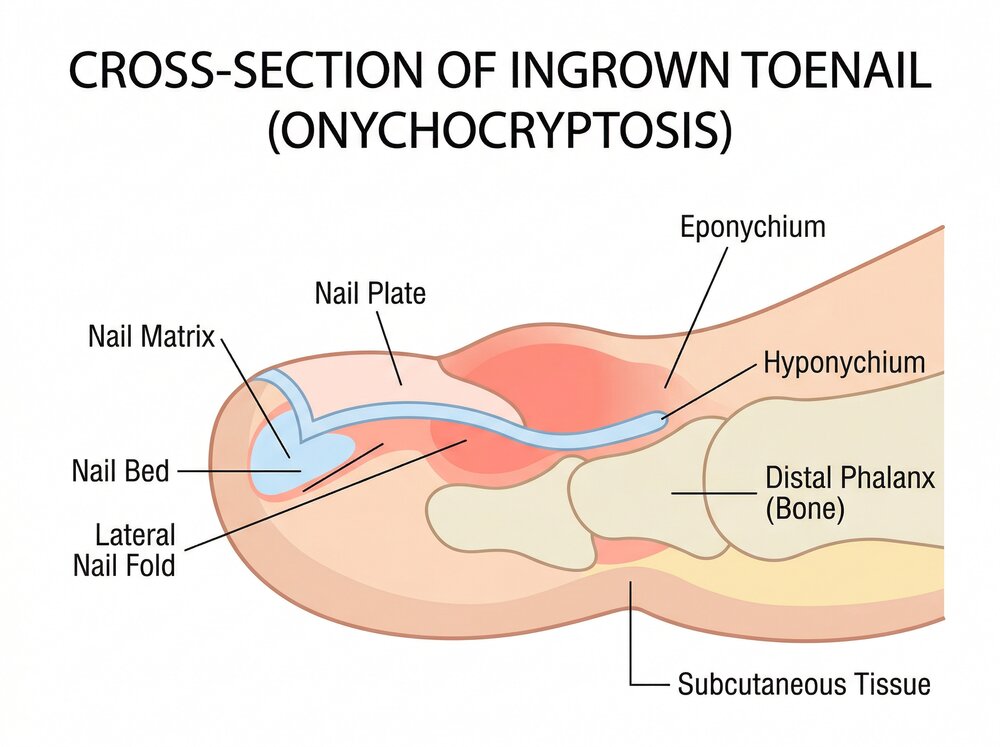
Medical diagram showing a cross-section of a toenail with labelled anatomy: nail matrix, nail plate, nail bed, and lateral nail fold

Stages of Ingrown Toenail Progression

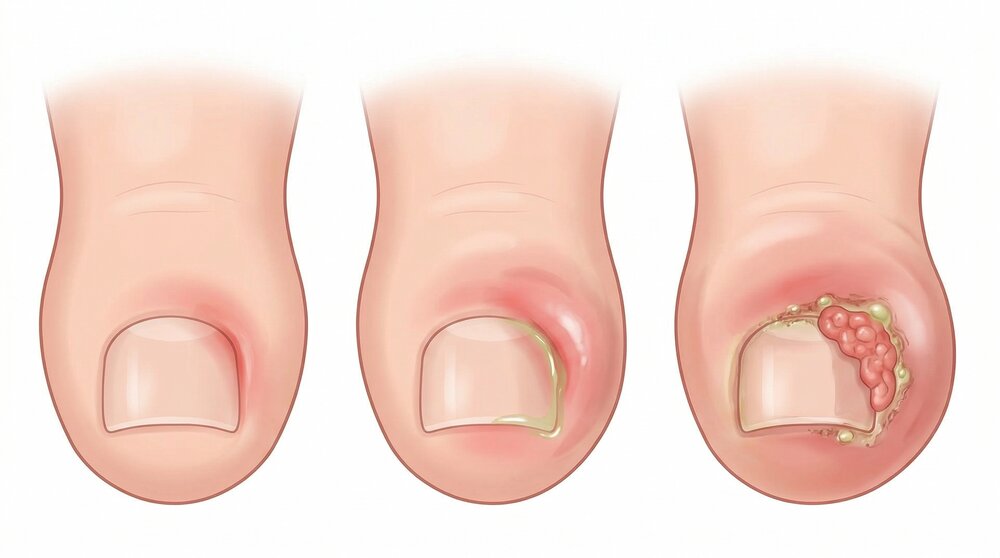
Ingrown toenails typically progress through three stages if left untreated.

Illustration showing three stages of ingrown toenail progression: Stage 1 mild with redness and swelling, Stage 2 moderate with infection, Stage 3 severe with granulation tissue

Stages of ingrown toenail progression — from mild inflammation to chronic infection

Stage 1 — Mild

Redness, mild swelling, and tenderness along the nail edge. Pain when pressure is applied. May respond to conservative treatment.

Stage 2 — Moderate

Increased swelling, drainage, and possible infection. The skin begins to fold over the nail edge. Walking may become painful.

Stage 3 — Severe

Chronic inflammation with granulation tissue (hypergranulation). Significant pain and infection risk. Surgical intervention is typically necessary.

What Causes Ingrown Toenails?

Ingrown toenails can result from a combination of factors. Understanding these causes can help with prevention:

  • Incorrect nail cutting — Cutting nails too short or rounding the edges encourages the nail to grow into the skin. Nails should be trimmed straight across.
  • Tight or narrow footwear — Shoes that compress the toes push the skin against the nail edge, increasing the risk of ingrowth.
  • Trauma or injury — Stubbing the toe, dropping something on it, or repetitive pressure from sports can trigger ingrown nail growth.
  • Genetics and nail shape — Some people naturally have curved or fan-shaped nails that are more prone to becoming ingrown.
  • Excessive sweating — Moist, softened skin around the nails makes it easier for the nail edge to penetrate the surrounding tissue.
  • Poor foot hygiene — Infrequent washing or drying can contribute to skin softening and bacterial colonisation.

Symptoms to Watch For

Common signs of an ingrown toenail include:

  • Pain and tenderness along one or both sides of the toenail
  • Redness and swelling of the skin around the nail
  • Warmth or heat in the affected area
  • Pus or discharge (indicating infection)
  • Overgrowth of skin around the nail edge (granulation tissue)
  • Difficulty wearing shoes or walking comfortably

When to See a Doctor

You should see a doctor if you experience any of the following:

  • Pain that is worsening or not improving with home care
  • Signs of infection — redness spreading, pus, increased swelling, or warmth
  • You have diabetes, peripheral vascular disease, or a condition that affects healing
  • The ingrown toenail keeps recurring despite conservative measures
  • You are unsure whether the condition requires treatment

Why Early Treatment Matters

Left untreated, an ingrown toenail can progress from mild discomfort to a serious infection. In patients with diabetes or compromised circulation, delays in treatment can lead to complications including cellulitis and, in rare cases, osteomyelitis (bone infection). Seeking treatment early often means a simpler procedure and faster recovery.

Treatment Options

Conservative (Non-Surgical) Management

For mild (Stage 1) ingrown toenails, conservative measures may be appropriate:

  • Soaking the foot in warm, salty water for 10–15 minutes, twice daily
  • Wearing open-toed or wide-fitting shoes to reduce pressure
  • Gently lifting the nail edge and placing cotton wool or dental floss underneath
  • Keeping the area clean and dry
  • Over-the-counter antiseptic solutions

If conservative measures do not resolve the problem within 1–2 weeks, or if the condition worsens, a procedural intervention is recommended.

Wedge Resection (Partial Nail Avulsion)

For moderate to severe ingrown toenails, a wedge resection is one of the most commonly recommended treatments. This involves removing the offending nail edge under local anaesthetic and applying a chemical (phenol) to prevent regrowth in that area.

When performed by a GP, wedge resections attract a Medicare rebate under MBS item 47915 — meaning patients receive a rebate that reduces their out-of-pocket cost.

Learn more about the procedure →

Frequently Asked Questions

A local anaesthetic is administered before the procedure begins, which numbs the toe completely. You may feel a brief sting during the anaesthetic injection, but you should not feel pain during the procedure. Some mild discomfort may be experienced in the days following the procedure, which can typically be managed with over-the-counter pain relief.

The wedge resection procedure typically takes approximately 10–15 minutes once the anaesthetic has taken effect. Including the consultation and anaesthetic administration, you should expect to be at the clinic for approximately 30–45 minutes.

No referral is needed. You can book directly with Dr Phong Ho at My Family Doctors via HotDoc or by calling the clinic. At your initial consultation, Dr Ho will assess your condition and discuss whether a wedge resection is appropriate. If so, the procedure is typically booked for a follow-up appointment.

Yes. When performed by a GP, the wedge resection procedure is listed under Medicare Benefits Schedule (MBS) item 47915. This means you will receive a Medicare rebate that reduces your out-of-pocket cost. The consultation itself may also attract a Medicare rebate.

The total fee for the procedure is $400. A Medicare rebate applies under MBS item 47915, which reduces your out-of-pocket cost. The exact rebate amount depends on your Medicare eligibility. Please contact the clinic for the most current information on fees and rebates.

Most patients can return to normal activities within 1–2 days. The toe typically heals fully within 2–4 weeks. You will receive aftercare instructions including how to keep the wound clean, when to change dressings, and signs to watch for. It is advisable to wear open-toed shoes for the first few days.

When a wedge resection is performed with phenol cauterisation of the nail matrix, the recurrence rate is low. Studies report recurrence rates of approximately 5–10% with this technique. If the ingrown toenail does recur, a repeat procedure or a wider excision may be considered.

A GP can offer a number of advantages when managing ingrown toenails. GPs can prescribe antibiotics if infection is present, assess and manage underlying conditions such as diabetes or peripheral vascular disease, and perform wedge resections under a Medicare item number — providing a rebate that reduces your out-of-pocket cost. A GP can also coordinate your overall care and follow up with you as part of your ongoing health management.

Patients with diabetes, peripheral vascular disease, or immunosuppression require extra care when managing foot problems. As a GP, Dr Ho can assess your vascular status, review your medications, and coordinate with your specialist team if needed — all as part of the same consultation. This holistic approach is one of the key advantages of seeing a GP for this procedure.

In most cases, you can drive yourself home after the procedure, as only the toe is anaesthetised. However, if the procedure is on your right foot and you drive an automatic vehicle, you may experience some discomfort pressing the pedals. If you are unsure, it may be advisable to arrange alternative transport.

Ready to Get Relief?

Book a consultation with Dr Phong Ho at My Family Doctors, Five Dock. Appointments available online via HotDoc.

Book Now